
In today’s fast-paced digital world, businesses can no longer rely solely on traditional marketing methods. The internet has transformed how brands connect with their audience, making digital marketing one of the most powerful tools for growth. Whether you are a small business owner, a startup founder, or part of a large enterprise, understanding digital marketing is essential to staying competitive.
What is Digital Marketing?
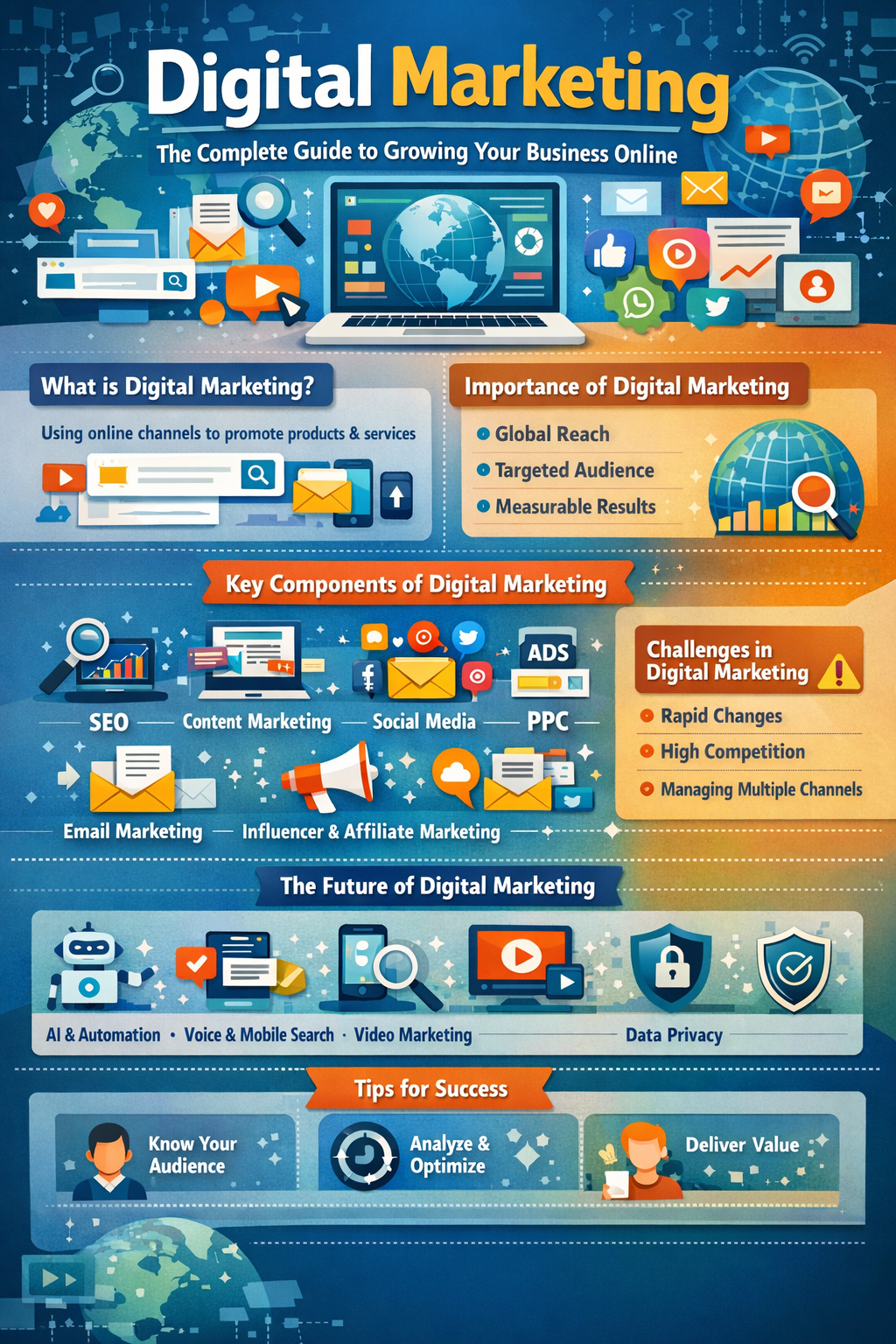
Digital marketing refers to all marketing efforts that use the internet or electronic devices to promote products and services. Businesses leverage digital channels such as search engines, social media, email, and websites to connect with current and potential customers. Unlike traditional marketing, digital marketing allows for real-time data tracking, targeted campaigns, and measurable results.
Importance of Digital Marketing
The importance of digital marketing lies in its ability to reach a global audience at a relatively low cost. With billions of people using the internet daily, businesses have an opportunity to connect with customers anytime and anywhere. It also provides precise targeting options, allowing companies to focus on specific demographics, interests, and behaviors.

Another major advantage is measurability. Tools and analytics platforms enable businesses to track performance, understand customer behavior, and optimize campaigns for better results. This level of insight is difficult to achieve with traditional marketing methods.
Key Components of Digital Marketing
1. Search Engine Optimization (SEO)
SEO is the process of optimizing your website to rank higher in search engine results pages. It involves keyword research, content optimization, technical improvements, and link building. A strong SEO strategy helps increase organic traffic and improves your website’s visibility.
2. Content Marketing
Content marketing focuses on creating valuable and relevant content to attract and engage your audience. This includes blog posts, videos, infographics, eBooks, and more. High-quality content builds trust, establishes authority, and drives customer engagement.

3. Social Media Marketing
Social media platforms like Facebook, Instagram, LinkedIn, and Twitter allow businesses to interact directly with their audience. Social media marketing helps increase brand awareness, generate leads, and build customer relationships. It also enables businesses to run targeted advertising campaigns.
4. Pay-Per-Click Advertising (PPC)
PPC is a form of online advertising where businesses pay each time a user clicks on their ad. Platforms like Google Ads and social media networks offer PPC campaigns that can drive immediate traffic to your website. It is a cost-effective way to reach potential customers quickly.
5. Email Marketing
Email marketing remains one of the most effective digital marketing strategies. It allows businesses to communicate directly with their audience, promote products, share updates, and nurture leads. Personalized email campaigns can significantly improve customer retention and conversions.
6. Affiliate Marketing
Affiliate marketing involves partnering with individuals or other businesses to promote your products or services. Affiliates earn a commission for each sale or lead they generate, making it a performance-based marketing strategy.
7. Influencer Marketing
Influencer marketing leverages individuals with a large online following to promote your brand. Influencers can help increase credibility and reach a wider audience, especially among younger consumers.
Benefits of Digital Marketing
One of the biggest benefits of digital marketing is cost-effectiveness. Compared to traditional advertising methods, digital campaigns can be executed with a smaller budget while delivering better results. This makes it ideal for small businesses and startups.
Another benefit is flexibility. Digital marketing campaigns can be adjusted in real time based on performance data. This allows businesses to optimize their strategies and maximize return on investment (ROI).
Digital marketing also enhances customer engagement. Through social media, email, and interactive content, businesses can build meaningful relationships with their audience. Engaged customers are more likely to become loyal brand advocates.
Challenges in Digital Marketing
Despite its advantages, digital marketing comes with its own set of challenges. One of the main challenges is the constantly changing landscape. Search engine algorithms, social media trends, and consumer behavior evolve rapidly, requiring businesses to stay updated.
Another challenge is increased competition. As more businesses invest in digital marketing, standing out becomes more difficult. This makes creativity, consistency, and data-driven strategies essential for success.
Additionally, managing multiple digital channels can be complex. Businesses need to ensure a consistent brand message across platforms while effectively tracking performance.
Future of Digital Marketing
The future of digital marketing is driven by technology and innovation. Artificial intelligence (AI), machine learning, and automation are transforming how businesses interact with customers. Personalized marketing experiences, chatbots, and predictive analytics are becoming more common.
Voice search and mobile optimization are also gaining importance as more users rely on smartphones and voice assistants. Video content continues to dominate, with platforms like YouTube and short-form video apps playing a significant role in marketing strategies.
Moreover, data privacy and ethical marketing practices are becoming critical. Businesses must ensure transparency and build trust with their audience while complying with regulations.
Tips for Successful Digital Marketing
To succeed in digital marketing, businesses should start with a clear strategy. Understanding your target audience, setting goals, and choosing the right channels are crucial steps.
Consistency is key. Regularly publishing content, engaging with your audience, and maintaining a strong online presence can significantly impact your results.
It is also important to analyze and optimize your campaigns. Use analytics tools to measure performance and make data-driven decisions. Testing different strategies and adapting based on results will help you improve over time.
Lastly, focus on providing value. Whether it’s through informative content, helpful resources, or engaging campaigns, delivering value to your audience will build trust and drive long-term success.

Conclusion
Digital marketing has revolutionized the way businesses connect with their customers. It offers unparalleled opportunities for growth, engagement, and brand building. By leveraging the right strategies and staying updated with industry trends, businesses can achieve remarkable success in the digital landscape.
As the digital world continues to evolve, those who embrace innovation and prioritize customer experience will stand out. Investing in digital marketing is no longer optional—it is essential for any business looking to thrive in today’s competitive environment.